Now that spring is creeping closer I thought since it's time to start your tomatoes and peppers or other seeds in general I would talk about damping off disease. Damping off disease is one of the major causes of seed starting failure. The disease is actually caused by a variety of fungi that can kill seedings and germinating seeds. Here are some tips to live by when starting seeds to prevent damping off disease
1) It's in the Mix
One major component of preventing damping off disease is to use a sterilized seed starting mix. DON'T ever use garden soil ever!!!! Also don't use regular potting mix, or even worse potting soil (I never use potting soil for anything, it's crappy) to start seeds. Commercial seed starting mixes aren't necessarily sterile so as an extra precaution you can bake your seed starting mix on baking sheets in the oven at 200 F to kill the the spores of the mold and fungi.
2) Don't over water
Once the seedling start to germinate cut back on the water a bit. Overly wet soggy conditions create the right environments for some nasty mold growth.
3) More Air
Circulation of air around seedling also reduces fungi and mold growth. It also prepares seedling for lie outdoors where the air is not still. This can be achieved by using a fan on your seedlings.
4) Look for Signs
If you see signs of mold growth or seedlings flopping over and dying there is still hope if you catch it early.
5) Treatment
You can spray your seedlings with one tablespoon of 3% hydrogen peroxide mixed with a quart of water. This will kill most kinds of funky fungi and mold that might grow in your seed starting trays. Also a strong Chamomile tea works as well, chamomile has anti-fungal properties.
Sunday, March 1, 2015

Saturday, February 7, 2015
First Signs of Spring, Blooming Crocus and Snowdrops
I apologize for not posting very much I have been very busy. However here are some pics I took yesterday of the first spring flowers of the season. This crocus and snowdrops are the first signs that spring is just around the corner.


Thursday, April 17, 2014
Spring Wouldn't be the Same without Daffodils
Spring wouldn't be the same without daffodils, or as folks around here would call them "Easter Flowers". Daffodils are often seen growing wild in the country side, sometimes they are all that remains of old homesteads. When I see a patch of these daffodils I often wonder who planted them. I imagine a farmers wife 150 years ago planted them, I bet she never imagined they would still be blooming year after year long after she was gone and after her farm had been reclaimed by mother nature. I have several different varieties of daffodils growing in my garden, they come in a vast array of flower types and colors in shades of white, salmon, pink, peach, yellows, and oranges. I love daffodils, their blooms remind me of cheery smiling faces on a bring sunny spring day. I enjoy watching them bloom year after year heralding in Spring.


Cactus Garden Update
I uncovered my Cacti garden yesterday and I had some casualties from the polar vortex. I lost both my Agave parryi var parryi, Several Optunias including Optunia Canapa 'Ellisiana', My Cane Cholla Cylindropuntia imbricata also bit the dust, and I lost my Horse Crippler Echinocactus texensis and a few others. The Ghost Plant Graptopetalum paraguayense also fried though I did notice a few leaves and stems made it and were starting to grow back. My Agave Harvardia looks kind of rough but it survived another winter.


Monday, February 17, 2014
Vintage Seed Catalogue Covers
I really love the look of old vintage seed catalogue covers. The artwork is beautiful, most seed catalogues today feature photographs but I admire the old floral artwork of past generations. I think I might get a few vintage covers to frame and hang on my wall.


Thursday, February 13, 2014
Wednesday, February 5, 2014
Kalanchoe fedtschenkoi 'Variegata'
Kalanchoe fedtschenkoi 'Variegata' is blooming indoors while there is snow on the ground outside. I was not expecting this plant to bloom. I got it over the summer and it didn't start blooming until I moved it inside. The flowers are small but are a nice orange color. What a nice surprise!


Tomato Talk: Determinate vs. Indeterminate
Since soon it will be time to start your seeds indoors. I thought I would talk about tomatoes, which are my favorite vegetable to grow, well botanically speaking they are a fruit but you get the idea.
Now you may ask what is the difference between determinate and indeterminate tomato cultivars? They are all tomatoes right? The difference between determinate and indeterminate tomato cultivars lies in their growth and fruiting habits.
Determinate tomatoes grow to a certain size and will not get any bigger. Determinate cultivars also usually set fruit sooner and most of the fruit is produced all at one time. Also another perk to growing determinate tomatoes is that they are smaller and require less soil; this trait makes them more suited for container gardening.
Indeterminate cultivars on the other hand keep growing all season, set fruit later, and keep producing till frost. The photo attached to this post is of a Cherokee Purple Tomato I grew last season, which happens to be an indeterminate cultivar.

Now you may ask what is the difference between determinate and indeterminate tomato cultivars? They are all tomatoes right? The difference between determinate and indeterminate tomato cultivars lies in their growth and fruiting habits.
Determinate tomatoes grow to a certain size and will not get any bigger. Determinate cultivars also usually set fruit sooner and most of the fruit is produced all at one time. Also another perk to growing determinate tomatoes is that they are smaller and require less soil; this trait makes them more suited for container gardening.
Indeterminate cultivars on the other hand keep growing all season, set fruit later, and keep producing till frost. The photo attached to this post is of a Cherokee Purple Tomato I grew last season, which happens to be an indeterminate cultivar.

Tuesday, January 21, 2014
Look What Arrived in the Mail Today!
The other day I commented on a post that was on the Botanical Interests Seeds Facebook page. The post was about growing poppies. I tried growing some Lauren's Grape Poppies and California poppies last year with not much luck. I planted them too late apparently. I should have planted them in the very early spring before the last frost. The Lauren's Grape poppies never came up and my California poppies never bloomed, very sad I know.
Anyway I commented on the post about my past misfortunes with poppies and the owner of Botanical Interests commented below and told me to e-mail him and he would send replacements. So I was expecting just a pack of seeds in the mail and to my surprise I received a box that contained several different types of poppy seed, as well as a mouse pad, a calendar, and a note pad. Anyway it really made my day and I appreciated it very much, gotta love free goodies, lol.
Botanical Interests is a great seed company. I have ordered from them for many years and have never been disappointed. Check out their site it's in my links of my favorite companies if your interested in them, they specialize in heirloom and organic seeds and they have signed the no GMO pledge.

Anyway I commented on the post about my past misfortunes with poppies and the owner of Botanical Interests commented below and told me to e-mail him and he would send replacements. So I was expecting just a pack of seeds in the mail and to my surprise I received a box that contained several different types of poppy seed, as well as a mouse pad, a calendar, and a note pad. Anyway it really made my day and I appreciated it very much, gotta love free goodies, lol.
Botanical Interests is a great seed company. I have ordered from them for many years and have never been disappointed. Check out their site it's in my links of my favorite companies if your interested in them, they specialize in heirloom and organic seeds and they have signed the no GMO pledge.

Deer in the Snow
I took these photos of two deer that took a stroll through my yard after we had a nice snowfall about two weeks ago.


Thursday, December 19, 2013
Winter Protection
So I have mentioned methods of winter protection before in the past but im going to briefly explain how I do this again for my plants that are not 100% hardy in my climate.
Desert plants(Hardy Cacti and Agave) In my desert garden I cover my plants with old glass window panes, cold frames, or whatever I can find I am all for being creative and resourceful. I even use Bamboo from my bamboo grove to create a frame that I put clear window plastic over to help protect some of the cacti. Cacti and Agave hate wet weather many can take the cold but cannot do wet cold they tend to rot. So in the middle of October here in USDA zone 6b I cover up my desert bed to let the bed dry out and to keep the rain off before the cold sets in. I cover everything in 4ml window plastic to keep out the wetness.
Hardy Palms With my hardy palms Chinese Windmill Palm (Trachycarpus fortunei), Sabal minor, and Needle palm (Rhapidophyllum hystrix) I use this method. I use a large tomato cage put over the palm wrap the tomato cage in several layers of bubble wrap then stuff with dry leaves and or straw. Then I put a plastic heavy duty trash bag over the top of this and then use twine and tie tightly around the tomato cage to keep the plastic on. You will probably have to use duck tape or heavy duty packing tape to keep the bubble wrap from flying off if it gets windy, they can unravel. After established(after 2 years) the palms may survive without protection depends on your climate and moisture and the species of palm. Needle palms and Sabal minors are very hardy and more tolerant of moisture than other palms. Many palms can rot during wet cold weather. There is a group of Windmill palms in Bulgaria that have survived for many years unprotected in very cold temperatures, but these may be more cold hardy than many other strains of Windmill palms. It's all an experiment really.
Here are some photos of my winter protection from this winter.


Desert plants(Hardy Cacti and Agave) In my desert garden I cover my plants with old glass window panes, cold frames, or whatever I can find I am all for being creative and resourceful. I even use Bamboo from my bamboo grove to create a frame that I put clear window plastic over to help protect some of the cacti. Cacti and Agave hate wet weather many can take the cold but cannot do wet cold they tend to rot. So in the middle of October here in USDA zone 6b I cover up my desert bed to let the bed dry out and to keep the rain off before the cold sets in. I cover everything in 4ml window plastic to keep out the wetness.
Hardy Palms With my hardy palms Chinese Windmill Palm (Trachycarpus fortunei), Sabal minor, and Needle palm (Rhapidophyllum hystrix) I use this method. I use a large tomato cage put over the palm wrap the tomato cage in several layers of bubble wrap then stuff with dry leaves and or straw. Then I put a plastic heavy duty trash bag over the top of this and then use twine and tie tightly around the tomato cage to keep the plastic on. You will probably have to use duck tape or heavy duty packing tape to keep the bubble wrap from flying off if it gets windy, they can unravel. After established(after 2 years) the palms may survive without protection depends on your climate and moisture and the species of palm. Needle palms and Sabal minors are very hardy and more tolerant of moisture than other palms. Many palms can rot during wet cold weather. There is a group of Windmill palms in Bulgaria that have survived for many years unprotected in very cold temperatures, but these may be more cold hardy than many other strains of Windmill palms. It's all an experiment really.
Here are some photos of my winter protection from this winter.


Sunday, October 13, 2013
Ox Blood and Red Spider Lilies
With the fall rains upon us the Ox Blood Lilies(aka School house lilies) and Red Spider Lilies (aka Hurricane & Magic Lilies) have began to bloom. The Ox Blood lilies came up next to some potted Agave americana and the Red Spider lilies sprouted out from under a red chrysanthemum.


Thursday, October 10, 2013
Mr. Moy Ginger's Surprise bloom
I was walking in the garden yesterday and I smelled a floral smell, like some kind of flower was in bloom. Then I noticed later the the Mr. Moy Ginger in my tropical themed garden was blooming. The flower smells amazing and is very beautiful. I was not expecting it to bloom really as it's almost the middle of October.


Monday, October 7, 2013
Momo Botan Dwarf Lotus
The Momo Botan dwarf lotus I planted in my mini water garden made out of a large pot bloomed again for the second time. I bought it off ebay and was surprised that it even bloomed once let alone twice since it was it's first year and it was only a small offset.


Banana's, my tropical garden.
So I am sorry for the long hiatus I took from blogging. I have been very busy working and I just graduated from College with my BA in History. I took some photos of the tropical section of my garden which includes Japanese Fiber Banana aka Musa Basjoo, various elephant ears, and Cannas among others. You can see that they have all grown quite a bit since I took photos of them last at the begging of the season. 


Monday, June 3, 2013
Flowers in the Garden
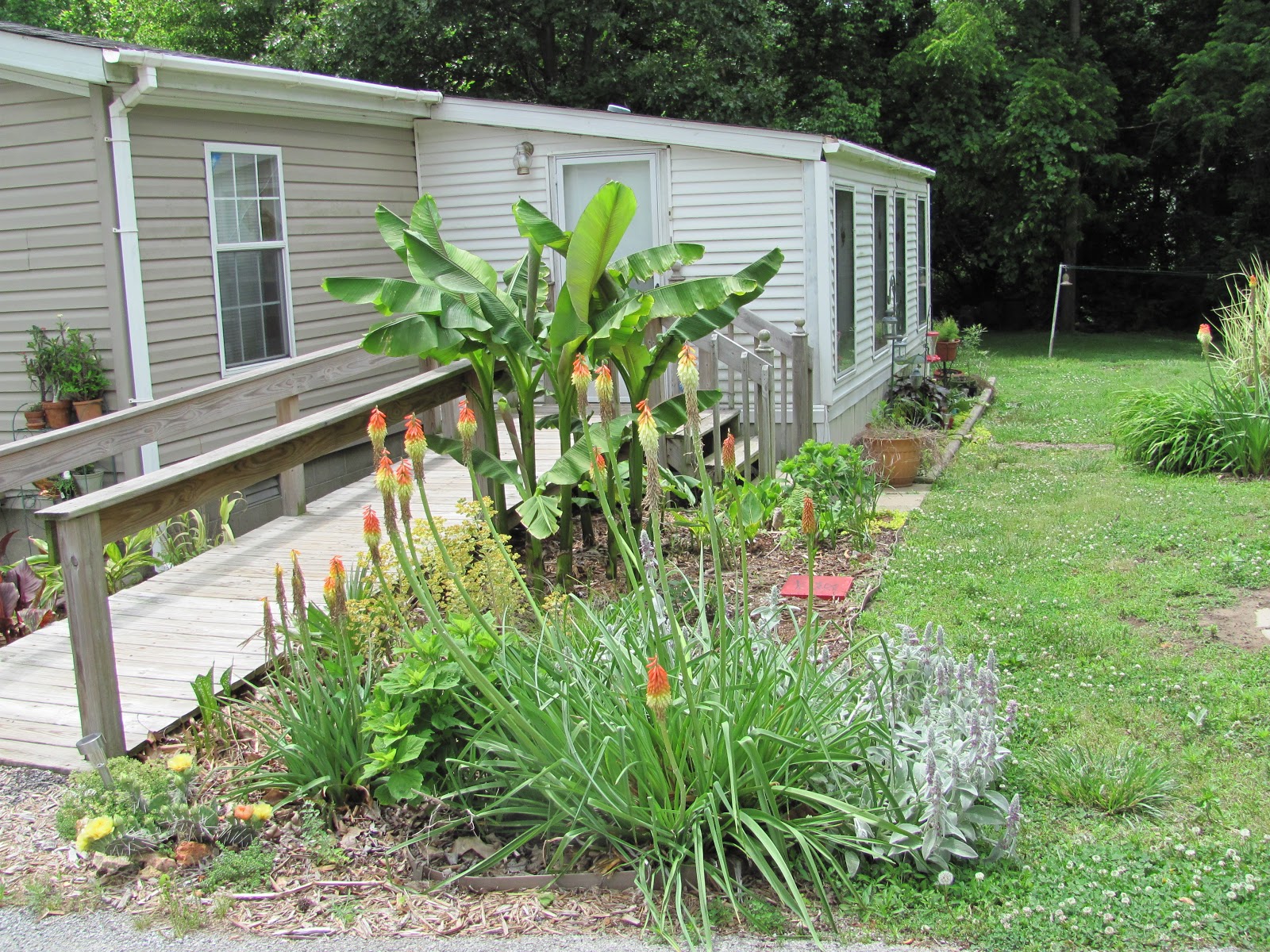
Took some pics from around the garden of the Red hot pokers, Clematis, Lamb's ear, Hardy Japanese Fiber Banana, Clematis, Daylily "Happy Returns", Knock out roses, Hardy Prickly pear cactus in bloom, and "Major Wheeler" Honeysuckle vine.




Iris
Took some pics today my Bearded Iris"Oktoberfest" and my Siberian Iris "Caesar's brother" bloomed for the first time.


Subscribe to:
Posts (Atom)